1. The Grind of High Grid Tariffs
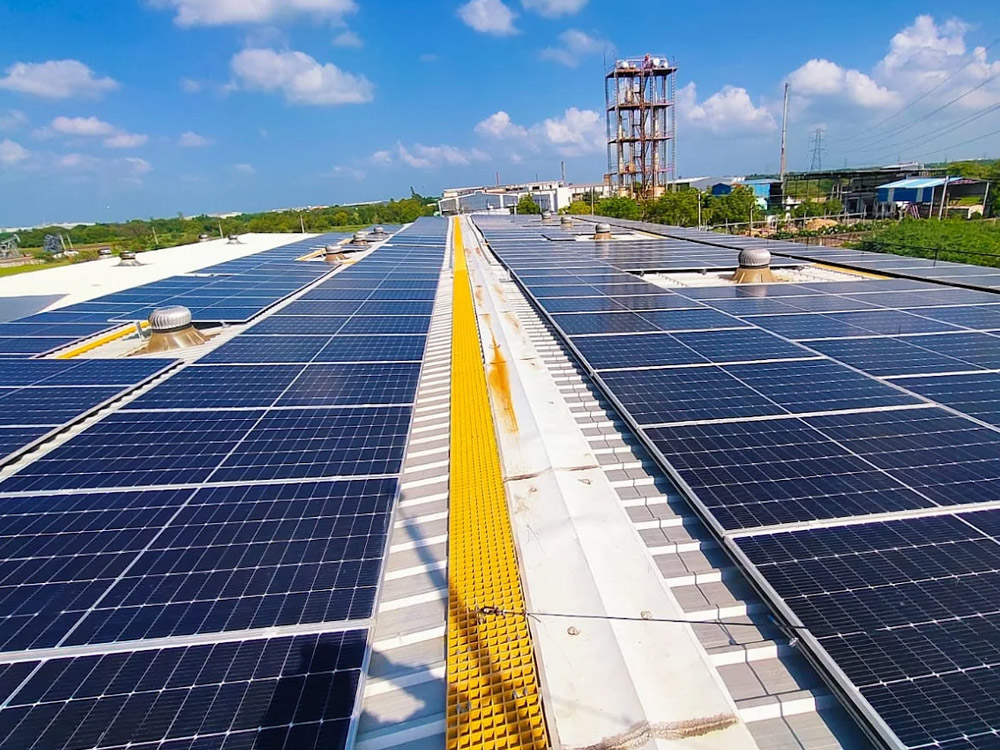
Industrial power tariffs are rarely simple, and they're rarely cheap. For energy-intensive operations, this is often one of the major line items after raw materials and labour. The rooftop solar array on the facility produces electricity at the point of use, reducing dependence on the grid during daylight hours when industrial loads are typically at their peak.
The result isn't just a smaller bill — it's a more predictable one, which matters when you're trying to forecast costs quarter over quarter.
2. The Uncertainty of Rising Tariffs
Even if today's rates are manageable, nothing about them is guaranteed. Tariff revisions, surcharges, and regulatory changes can shift the cost of grid power with little warning, making long-term budgeting a moving target. A solar plant locks in a portion of your generation for the life of the system — often 25 years — giving you a hedge against whatever the grid does next. It's less about eliminating grid dependency and more about controlling how exposed you are to it.
3. Demand Charges and Peak-Load Penalties
Many industrial tariff structures don’t just charge you for how much power you use, they charge you for when and how intensely you use it. Even if the total amount of electricity consumed seems reasonable, demand charges and peak-load penalties can quietly inflate a bill. Solar directly reduces daytime draw from the grid, which is often when these charges bite hardest. Pair it with battery storage (BESS), and facilities gain the flexibility to shift or shave load further — though the actual savings depend heavily on system design and the specific tariff structure in play.
4. The Real Cost of Downtime
Power interruptions rarely show up as a separate line item, but they cost real money — stalled production lines, restart delays, missed deadlines, sometimes damaged work-in-progress. These are operational costs disguised as inconvenience. A well-engineered solar system, especially one paired with appropriate backup or storage, adds a layer of energy resilience that reduces exposure to grid instability. It's not a guarantee against every outage, but it shifts the odds in your favor — and the degree of protection scales with how the system is configured against your actual load profile.
5. The Cost of Standing Still on Infrastructure
Facilities grow, so does their energy demand – and with it the pressure to keep upgrading infrastructure just to keep pace. Rooftop solar provides a different kind of return: it uses the unused roof space, an asset most facilities already own and rarely use, to generate power. Solar installation is part of the long-term energy plan and is designed around current and projected load requirements, not a one-time fix, so the business doesn’t have to make reactive infrastructure investments as often down the line.
Beyond the Bill
The case for industrial rooftop solar isn't just about a lower number at the end of the month. Done right, it helps businesses:
- Reduce dependence on grid electricity
- Lower long-term operating expenses
- Gain clearer visibility into energy costs
- Put unused rooftop space to productive use
- Advance sustainability and renewable-energy commitments
- Build a more resilient energy strategy through solar + BESS
Turning Roof Space Into a Power Asset
No two facilities consume energy the same way. A warehouse's load profile looks nothing like a manufacturing plant running multiple shifts, which is why the right solar capacity isn't a guess — it's the output of a proper site survey, electricity bill analysis, rooftop assessment, and load-profile study.
Get that groundwork right, and rooftop solar stops being just another capital expense. It becomes a long-term energy asset — one that pays down hidden costs the monthly bill never shows you.
Contact Grace Renewable Energy for rooftop solar installation at your factories and get benefits of NDCR panels rates (valid till 31st dec 2026)*